Easwaran: Instructions in Passage Meditation

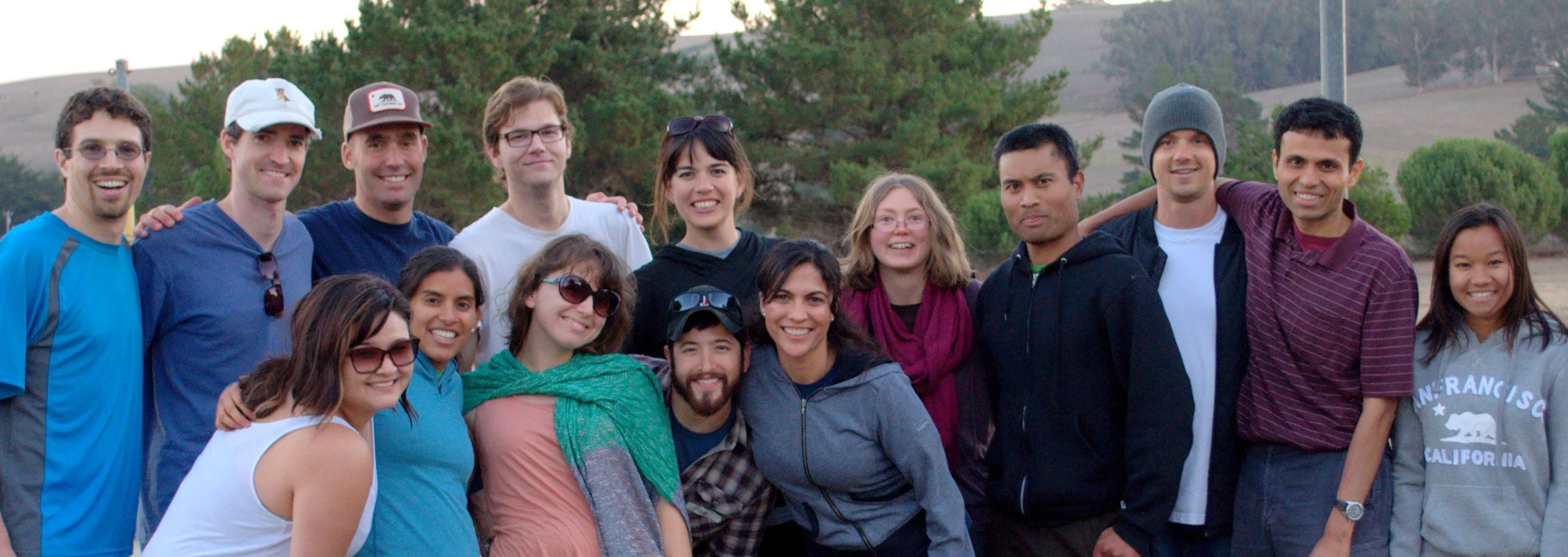
At the recent November Young Adult weekend retreat (more on this soon!), we spent a whole morning reviewing the basic instructions in passage meditation ­– “meditation mechanics” if you will. After spending a few hours getting tips and suggestions from other YA meditators, we here at the YA Blog Team started thinking. . . have we ever explicitly shared the instructions in passage meditation on the blog? Well, no time like the present!
YA-November-Retreat-2013.jpg

This week we’re sharing an excerpt by Eknath Easwaran from the recent BMCM Spring 2013 Journal detailing the practice of passage meditation. We hope these basic instructions inspire newcomers to try passage meditation and encourage long-time meditators to find ways to tune-up their practice.

Most of us have grasshopper minds, dispersing our attention, energy, and desires in all sorts of directions and depriving us of the power to draw upon our deeper, richer resources for creative living. Using an inspirational passage for meditation every day, as instructed below, helps to slow down the furious, fragmented activity of the mind so that we can gain control over it. The slow, sustained concentration on the passage drives it deep into our minds. Whatever we drive deep into consciousness, that we become. “All that we are,” declares the Buddha, “is the result of what we have thought.”

  • Meditate for half an hour every morning, as early as is convenient. Do not increase this period; if you want to meditate more, have half an hour in the evening also, preferably at the very end of the day.
  • Set aside a room in your home to be used only for meditation and spiritual reading. If you cannot spare a room, have a particular corner. But whichever you choose, keep your meditation place clean, well-ventilated, and reasonably austere.
  • Sit in a straight-backed chair or on the floor and gently close your eyes. If you sit on the floor, you may need to support your back lightly against a wall. You should be comfortable enough to forget your body, but not so comfortable that you become drowsy.
  • Whatever position you choose, be sure to keep your head, neck, and spinal column erect in a straight line. As concentration deepens, the nervous system relaxes and you may begin to fall asleep. It is important to resist this tendency right from the beginning, by drawing yourself up and away from your back support until the wave of sleep has passed.
  • Then, in your mind, go slowly through an inspirational passage from the scriptures or the great mystics. I usually recommend the Prayer of Saint Francis of Assisi:

Lord, make me an instrument of thy peace.
Where there is hatred, let me sow love;
Where there is injury, pardon;
Where there is doubt, faith;
Where there is despair, hope;
Where there is darkness, light;
Where there is sadness, joy.

O Divine Master, grant that I may not so much seek
To be consoled as to console,
To be understood as to understand,
To be loved as to love;
For it is in giving that we receive,
It is in pardoning that we are pardoned,
It is in dying to self that we are born to eternal life.

Easwaran-Meditation.jpg
  • Do not follow any association of ideas or try to think about the passage. If you are giving your attention to the words, the meaning has to sink in. When distractions come, do not resist them, but try to give more and more attention to the words of the passage. If your mind strays from the passage completely, bring it back gent­ly to the beginning and start again.
  • When you reach the end of the passage, you may use it again and again until you have memorized others. It is helpful to have a wide variety of passages for meditation, drawn from all the world’s major traditions. I recommend chapters two and twelve of the Bhagavad Gita, the Lord’s Prayer, the Twenty-third Psalm, the Beatitudes, and the first chapter of the Dhammapada of the Buddha. I have also translated some of the Upanishads for use in meditation. Whatever you choose, the passage should be positive and practical, chosen from a major scripture or a mystic of the highest stature.

The secret of meditation is simple: you become what you meditate on. When you use the Prayer of Saint Francis every day in meditation, you are driving the words deep into your consciousness. Eventually they become an integral part of your personality, which means they will find constant expression in what you do, what you say, and what you think.

If you're interested in more passages recommended by Easwaran for meditation you can find many of them free online, and all of them are in his collection "God Makes the Rivers to Flow" available as a paperback or e-book.

The Passage Portfolio: One Couple's Creative Solution To Managing Their Passages

Meet Adam and Emily, a San Francisco couple who created a tool to help them manage their passages.

DSC01092-edit.JPG

One of the great things about being married to a fellow passage meditator is that we can learn from and support each other on the spiritual path. This post's goal is to share an idea that came out of our discussions about a frequent problem we encounter, each in our own way: how to keep track of our passages.

Emily:  As a pretty new meditator, I found it difficult to find time to thoughtfully prepare which passages I'd use in morning meditation. My typical routine was to roll out of bed, head to our meditation room, and open randomly to one of the tabbed pages in my copy of God Makes the Rivers to Flow. Most often if I landed on one I didn't know well, I'd change passages mid-meditation to one I knew better (ah, St. Francis!), and those old friends started to get stale. I felt frustrated because I wasn't practicing many of the passages I'd spent time learning but didn't know as well. And on a number of occasions I lost a tab in my book and altogether forgot about a passage I knew.

Adam: And for me, I've been meditating for a number of years, and tend to be a pretty systematic guy.  I generally go through my passages in the order they're listed in the book, making exceptions anytime I feel a special need for the day. I've tried a bunch of systems, from marking my book's table of contents to bookmarking the passages on a Kindle. And those helped me a lot, but left me wanting more: for example, I wanted to know which passages I'd learned recently or knew least well, so I could give them extra practice.

YA-SF-Meditation.jpg

Adam and Emily (center), in their meditation room with fellow San Francisco YAs. 

Even though we have very different approaches for choosing our passages, we both felt it could help to have some better way to manage them. We started brainstorming and Emily had the idea of a personalized list with just your own passages. And since we had different systems for how to go through them, the list would need to be flexible – you should be able to sort it however you want or highlight the ones most important to you right now. Oh, and wouldn't it be great if it could make it easier to spot the passages you know that are recommended for specific situations, like changing procrastination, or building patience or courage? (These recommended passages for specific situations are listed at the back of the most recent edition of God Makes the Rivers to Flow).

With that inspiration, we designed this tool that we call the passage portfolio. We made the video below to introduce it and show how it works, so here we'll just highlight a couple of reasons why we think it's cool:

1. It's flexible, so it can help manage your passages no matter what your style

  • Emily: For me, it's been really nice having all my passages on one page. It makes it easy to quickly scan the passages I know so I can thoughtfully select one for the morning.
  • Adam:  I print out 2 copies – one sorted in the book's order and one sorted by how recently I learned them. It supports my system of going through the book in order and helps me remember to give extra practice to the ones I'm still learning.
YA-Passage-Portfolio-Use.jpg

Adam and Emily print paper copies of their passage porfolios to keep with their passage books in their meditation room. 

2. It helps you celebrate your successes and keep growing

  • Emily: I was amazed and proud that after only one year I already knew nearly 15 passages. Seeing them all together inspired me to keep working, drive them deeper, and learn more.
  • Adam & Emily:  It's great to look back at the list and see all the wisdom we’ve worked so hard to internalize. We can see how long we've known our passages, all the different mystics they come from, which ones we know best, and which we want to learn even better.

We've had a lot of fun creating and using this tool and found that it continues to help us deepen our practice. So that's why we want to share it with you!

But it's important to point out that Easwaran never gave a particular system for managing passages, and this project isn't sponsored by the BMCM. One of the great things about passage meditation is that you can be creative and approach it your own way. We hope that even if you don't use the passage portfolio, it may give you inspiration and ideas for how to sharpen the passages in your repertoire. We'd love to hear how you manage your passages in the comments below!

Start experimenting with the passage portfolio by downloading it and watching the video: 
(Note: the files below have been updated in 2016 based on suggestions from users within the BMCM community who have been using the passage portfolio.)

  • Blank Template - Download this to get started with your own passage portfolio.
  • Example Portfolio - Download this to see the example portfolio from the video. 

Note: The passage portfolio works on both Windows and Mac computers, but requires Microsoft Excel 2007 or later. 

Learn more about the passage portfolio through this video:

A Passage for November

YA-Gita.jpg

We loved hearing about all your book recommendations last week! So many of you mentioned enjoying Easwaran's translation and commentary on the Bhagavad Gita that we thought we should choose a passage from the Gita for November.

We've chosen "What Is Real Never Ceases" as our passage for November. In the past, we've suggested we all memorize the passage of the month and use it in our meditation. We were all set to do the same for November and then we realized. . . this passage is long. 

We thought about picking a different passage but decided to hold firm. This made us curious about how to balance shorter and longer passages and so we've got a few questions for you. We'd love to hear from you in the comments below!

  1. How do you choose new passages to meditate? By topic? By length? By source?
  2. Do you use different techniques to memorize or maintain long passages? 
  3. Do you notice a difference using a longer passage versus a shorter passage? 

What Is Real Never Ceases  – The Bhagavad Gita

The Self dwells in the house of the body, which passes through childhood, youth, and old age. So passes the Self at the time of death into another body. The wise know this truth and are not deceived by it.

When the senses come in contact with sense-objects they give rise to feelings of heat and cold, pleasure and pain, which come and go. Accept them calmly, as do the wise.

The wise, who live free from pleasure and pain, are worthy of immortality.

What is real never ceases to be. The unreal never is. The sages who realize the Self know the secret of what is and what is not.

Know that the Self, the ground of existence, can never be destroyed or diminished. For the changeless cannot be changed.

Bodies die, not the Self that dwells therein. Know the Self to be beyond change and death. Therefore strive to realize this Self.

Those who look upon the Self as slayer or as slain have not realized the Self. How can the Self be killed or kill when there is only One?

Never was the Self born; never shall it cease to be. Without beginning or end, free from birth, free from death, and free from time, how can the Self die when the body dies?

Who knows the Self to be birthless, deathless, not subject to the tyranny of time, how can the Self slay or cause to be slain?

Even as we cast off worn-out garments and put on new ones, so casts off the Self a worn-out body and enters into another that is new.

Not pierced by arrows nor burnt by fire, affected by neither water nor wind, the Self is not a physical creature.

Not wounded, not burnt, not wetted, not dried, the Self is ever and everywhere, immovable and everlasting.

The Self cannot be known by the senses, nor thought by the mind, nor caught by time. If you know this, you will not grieve.

Even if you mistake the Self to be subject to birth and death, you must not grieve. For death is certain for those who are born, as rebirth is certain for those who die. Why grieve over what cannot be avoided?

We perceive creatures only after birth, and after they die we perceive them not. They are manifest only between birth and death. In this there is no cause for grief.

Some there are who have realized the Self in all its wonder. Others can speak of it as wonderful. But there are many who don't understand even when they hear.

Deathless is the Self in every creature. Know this truth, and leave all sorrow behind.